
Herbs Oils and Things LLC
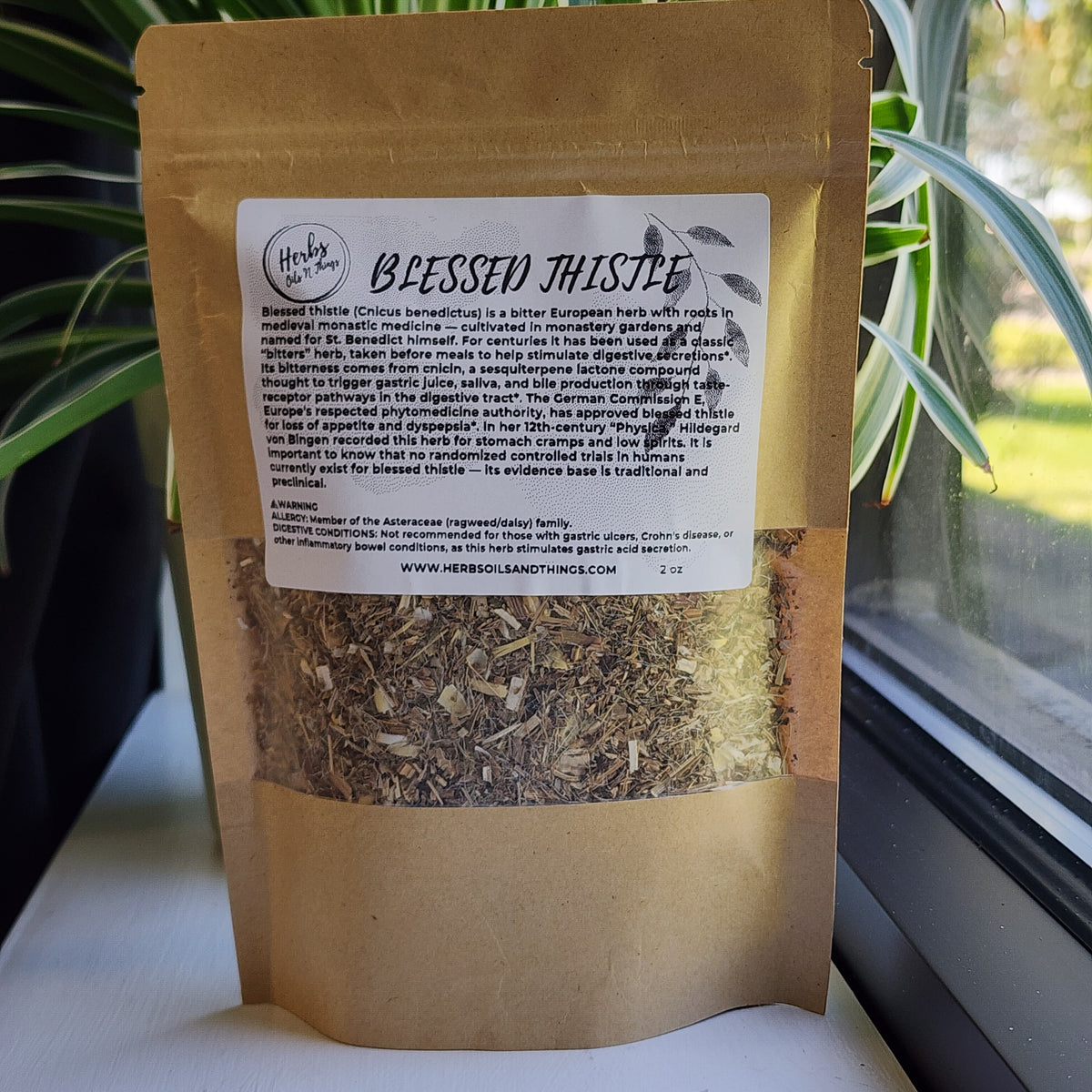
Blessed Thistle
Blessed Thistle
Couldn't load pickup availability
Cnicus benedictus | Digestive Bitter · Before-Meal Ritual · Monastic Tradition · Naturally Caffeine-Free
Tastes like: deeply bitter and herbal — a true old-world "bitters" cup. Fennel, ginger, or a little honey soften it.
In the monasteries of medieval Europe, monks grew a spiky, yellow-flowered thistle they called "holy thistle." For centuries it was a staple of the monastery garden and one of the first herbs an apothecary reached for.
Today blessed thistle is best known as a classic digestive bitter. Its bitter compound, cnicin, has been studied for its relationship to the natural flow of digestive juices, which is why it's traditionally sipped shortly before meals.* It also has a long folk tradition among nursing mothers. We'll say this plainly: that use is traditional, and clinical research hasn't confirmed it.
Why Blessed Thistle?
- A classic digestive bitter, traditionally sipped before meals*
- May support normal digestion and a healthy appetite*
- Contains cnicin, a bitter compound studied for its role in digestive secretions*
- A traditional folk herb among nursing mothers (traditional use only — not clinically confirmed)
- A staple of medieval European monastic herbalism
- Not the same as Milk Thistle — a different plant with a different traditional use
- Naturally caffeine-free
How to Brew
- Steep 1 tsp in 8 oz hot water for 10–15 minutes
- Strain and sip shortly before a meal
- Add fennel or ginger to soften the bitterness
Traditional tip: Bitter herbs were traditionally sipped in small amounts before meals. You don't need a big mug — a few warm sips is the tradition.
Supplement Facts Summary
Ingredients: Blessed Thistle (Cnicus benedictus), 100% pure. Serving size: 1 tsp per 8oz water. Net weight (2oz size): 2oz (57g). Nutritional values are approximate and vary by harvest.
Bundle With
Blessed Thistle pairs naturally with Fennel Seed or Ginger, or with Fenugreek for nursing mothers working with a lactation consultant.
Frequently Asked Questions
I'm nursing — can I use this? Please talk with your healthcare provider or lactation consultant first.
Is it safe during pregnancy? No — blessed thistle is not recommended during pregnancy.
Could I react to it if I have plant allergies? Possibly — blessed thistle is in the Asteraceae (daisy) family, so use caution if you're allergic to ragweed, chrysanthemum, marigold, or daisies.
Can I drink a lot of it? No — larger amounts may cause stomach upset. Consult your healthcare provider first if you have a sensitive stomach or a digestive condition.
These statements have not been evaluated by the Food and Drug Administration. This product is not intended to diagnose, treat, cure, or prevent any disease.
Share