
Herbs, Oils and Things
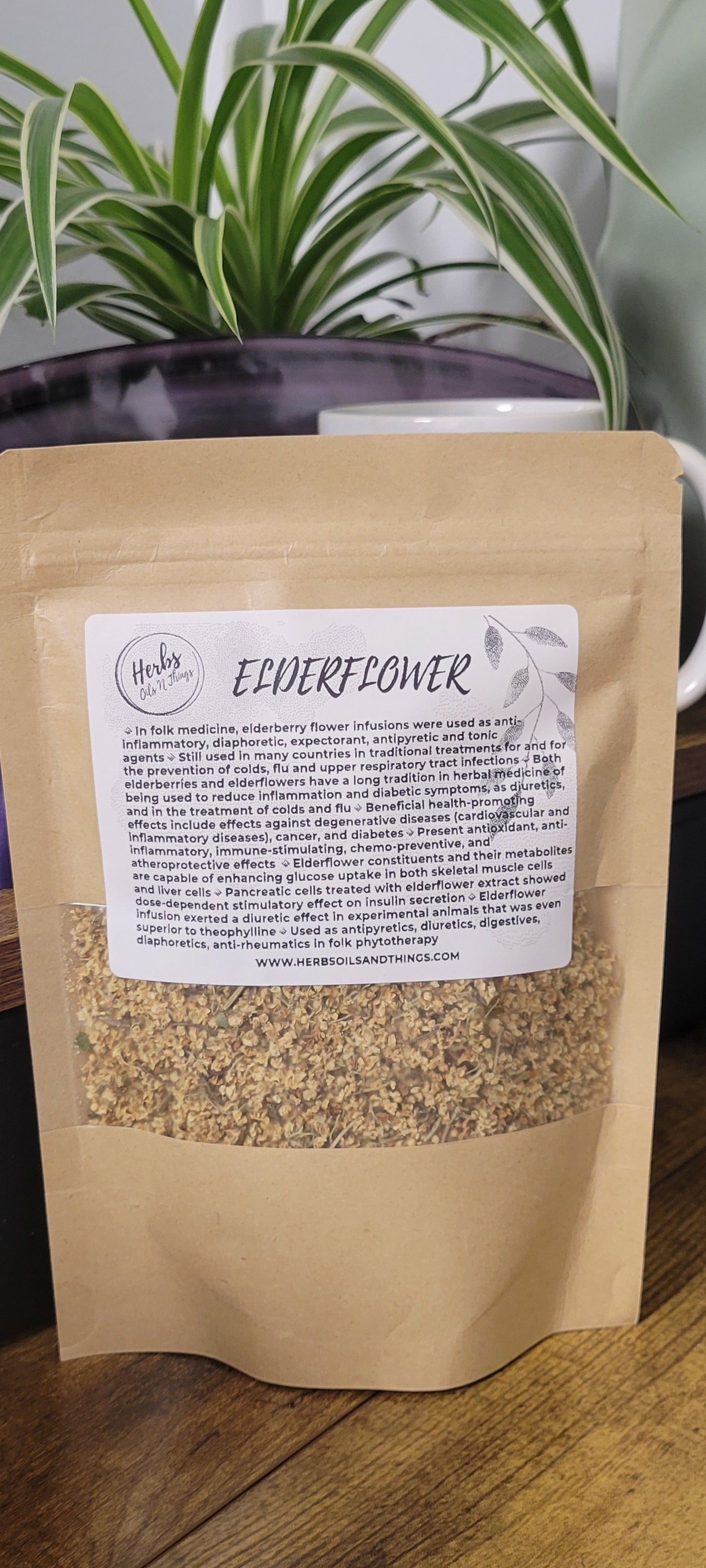
Elderflower
Elderflower
Couldn't load pickup availability
Sambucus nigra (flower) | Seasonal Wellness · Respiratory Comfort · Flavonol-Rich · Naturally Caffeine-Free
Tastes like: light, floral, and honeyed with a hint of muscat grape. One of the prettiest-tasting herbs in the shop.
Most people know elderberry. Far fewer know the creamy white flower that blooms on the same tree, and that's a shame.
Elderflower has been a European seasonal favorite for over 2,500 years, brewed hot whenever the weather turned. Where elderberry is known for its deep purple anthocyanins, elderflower brings something different: it's naturally rich in flavonols like quercetin and kaempferol, and it was traditionally sipped hot to support the body's natural warming response.*
Why Elderflower?
- May support normal upper respiratory and sinus comfort during seasonal transitions*
- Traditionally sipped hot to support the body's natural warming response*
- May support a healthy, balanced histamine response*
- Naturally rich in flavonols, including quercetin, kaempferol, and isorhamnetin*
- May support normal immune function*
- Supports antioxidant activity*
- Naturally caffeine-free
How to Brew
- Steep 1–2 tsp dried elderflower in hot water for 10–15 minutes, covered
- Covering matters — it keeps the delicate aromatic oils in your cup
- Add honey and lemon to taste, or chill it for a beautiful iced tea
Traditional tip: In Europe, elderflower is the flavor behind classic cordials and spritzers. Brew it strong, chill it, and top it with sparkling water for a refreshing summer drink.
Supplement Facts Summary
Serving size: 1 tsp (2g) dried flower, approx. 45 servings per package. Key compounds: quercetin, kaempferol, isorhamnetin, rutin. Nutritional values are approximate and vary by harvest.
Bundle With
Elderflower and Elderberry come from the same tree and make a natural pair for seasonal wellness. Or try both in our Allergy Fighter blend.
Frequently Asked Questions
How is this different from elderberry? They come from the same tree but bring different things to the cup. Elderberry is rich in anthocyanins and has a deep, jammy flavor; elderflower is rich in flavonols and tastes light and floral.
Is it safe during pregnancy? Not recommended during pregnancy or while breastfeeding without your healthcare provider's guidance.
Does it interact with medication? It may interact with diuretics and blood sugar medications — check with your healthcare provider if you take either.
Hot or iced? Both. Hot is the traditional seasonal way to enjoy it; iced shows off its floral, cordial-like flavor.
These statements have not been evaluated by the Food and Drug Administration. This product is not intended to diagnose, treat, cure, or prevent any disease.
Share