
Herbs, Oils and Things
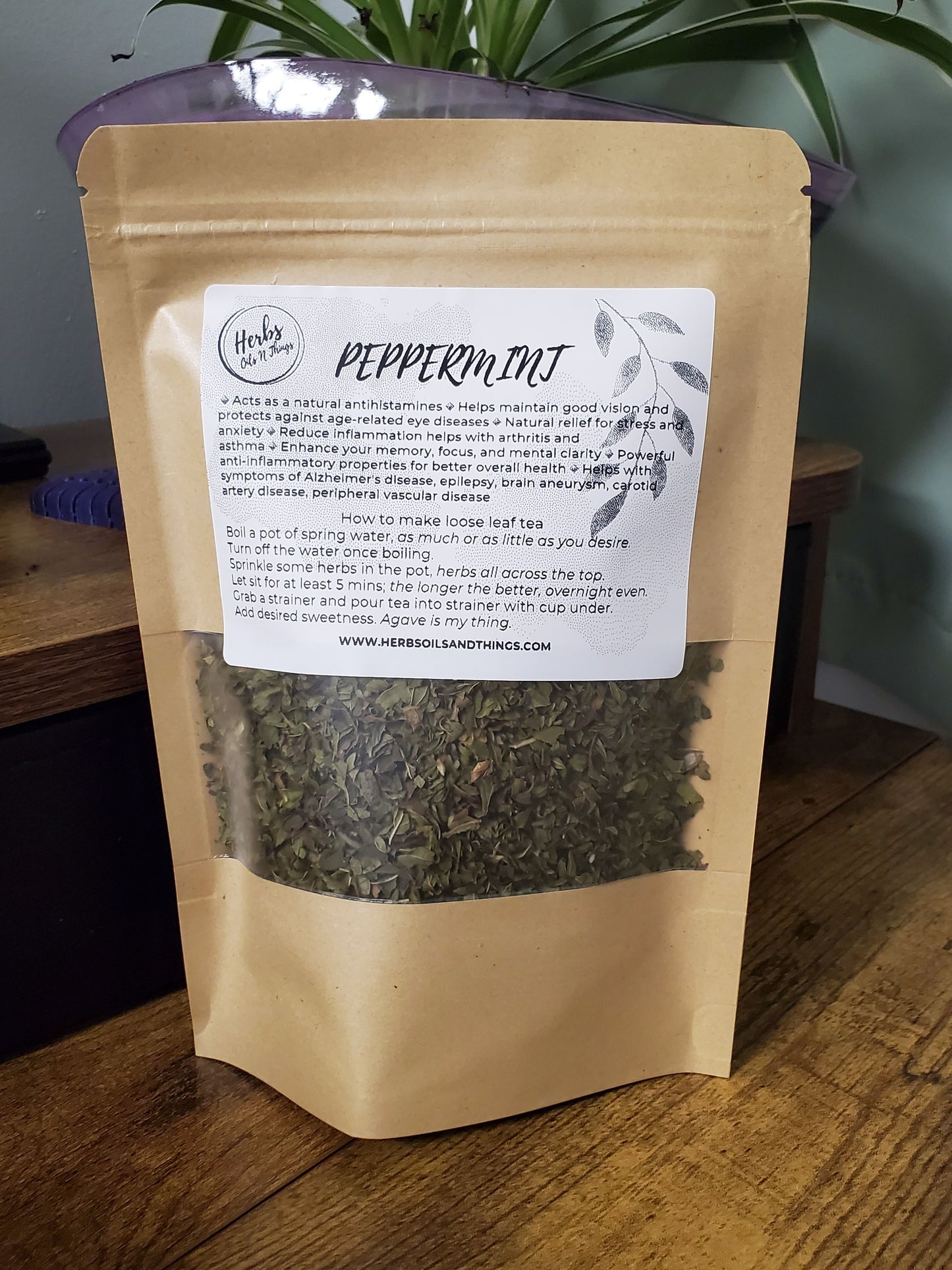
Peppermint
Peppermint
Couldn't load pickup availability
Mentha piperita | Digestive Comfort · Cooling · Respiratory Support
It's one of the most familiar teas on Earth — but peppermint's story starts as a 17th-century English discovery, a natural hybrid of watermint and spearmint, layered on top of centuries of even older European and Middle Eastern digestive folk tradition.
Peppermint's digestive reputation centers on menthol, a compound extensively studied in clinical research for its relationship to normal, healthy digestive muscle relaxation.* Multiple randomized controlled trials have examined peppermint oil's relationship to digestive comfort — worth knowing that most of that specific research used concentrated, enteric-coated capsules rather than tea.*
Why Peppermint?
- May support normal, healthy digestive comfort*
- May support normal, healthy bloating comfort after meals*
- May support normal, healthy respiratory comfort*
- Supports the body's normal, healthy inflammatory response*
- One of the most clinically studied culinary herbs*
- Bright, cooling, universally recognized flavor
- Rooted in European and Middle Eastern folk tradition
- Naturally caffeine-free
How to Brew
- Add 1 tsp dried peppermint leaf to a cup of freshly boiled water
- Cover and steep 5–10 minutes to preserve volatile aromatic oils
- Strain and enjoy warm or iced
Traditional tip: For a classic after-dinner digestive ritual, blend peppermint with fennel seed — a pairing European herbalists have leaned on for generations.
Supplement Facts Summary
Serving size: 1 tsp (2g) loose leaf, approx. 45 servings per package. Key compounds: menthol, menthone, rosmarinic acid. Nutritional values are approximate and vary by harvest.
Bundle With
Peppermint pairs naturally with Fennel Seed for digestive support, or Chamomile for a gentle evening blend.
Frequently Asked Questions
Is peppermint tea as strong as peppermint oil capsules? Most clinical research on digestive comfort used concentrated, enteric-coated peppermint oil capsules rather than tea — tea offers a gentler, everyday version of the same tradition.
Can I drink this if I have acid reflux? Peppermint may relax the lower esophageal sphincter in some people — consult your healthcare provider if you have acid reflux or GERD.
Can kids drink peppermint tea? Generally considered gentle for children in tea form, but consult a healthcare provider for infants and very young children.
Does it have caffeine? No — peppermint is naturally caffeine-free.
These statements have not been evaluated by the Food and Drug Administration. This product is not intended to diagnose, treat, cure, or prevent any disease.
Share