
Herbs, Oils and Things
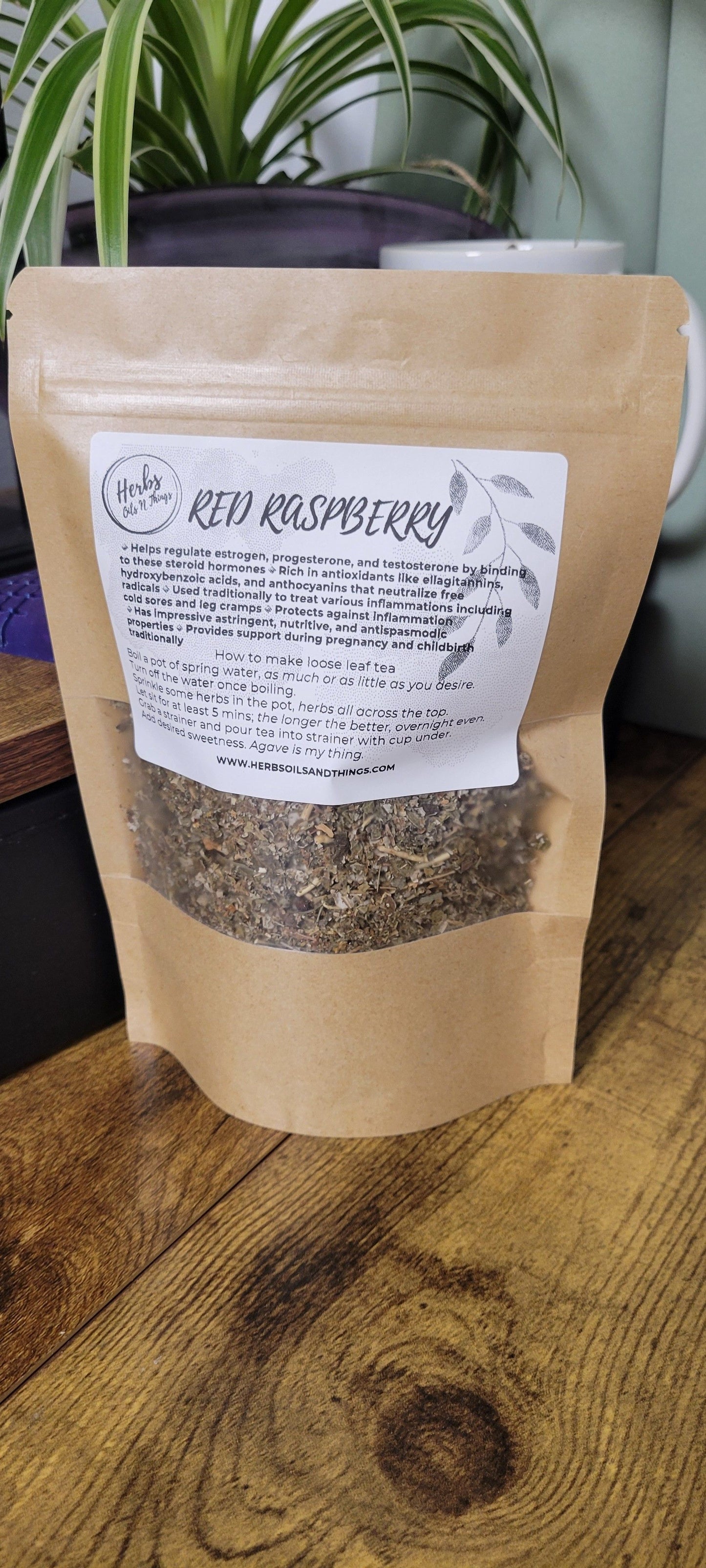
Red Raspberry Leaf
Red Raspberry Leaf
Couldn't load pickup availability
Rubus idaeus | Women's Wellness · Pregnancy Tradition · Menstrual Comfort
Across two continents and countless generations, midwives independently arrived at the same leaf: Native American traditions and European folk midwifery both documented red raspberry leaf as a trusted companion for women's reproductive wellness — a reputation that has outlasted centuries.
Its traditional reputation centers on fragarine, a compound long associated with uterine tonic activity, alongside tannins and flavonoids studied in preclinical research for antioxidant properties.* We want to be upfront: clinical research on labor-related outcomes has produced genuinely mixed results across different study designs — an important part of the picture.*
Why Red Raspberry Leaf?
- May support normal, healthy uterine tissue tone*
- May support normal, healthy menstrual comfort*
- May support normal, healthy tissue tone*
- Supports the body's normal, healthy inflammatory response*
- Rooted in both Native American and European midwifery tradition
- Mild, pleasant, slightly fruity-green flavor
- Traditionally introduced gradually through the third trimester*
- Distinct from raspberry fruit — this is leaf-specific tradition
How to Brew
- Add 1 tsp dried red raspberry leaf to a cup of freshly boiled water
- Cover and steep 10 minutes
- Strain and enjoy warm
Traditional tip: Traditional midwifery practice often blends red raspberry leaf with nettle leaf — a pairing valued for generations across multiple herbal traditions. If using during pregnancy, always follow your healthcare provider's specific guidance on timing and strength.
Supplement Facts Summary
Serving size: 1 tsp (2g) loose leaf, approx. 45 servings per package. Key compounds: fragarine, tannins, flavonoids. Nutritional values are approximate and vary by harvest.
Bundle With
Red Raspberry Leaf anchors our Women's Wellness collection — pairs traditionally with Nettle Leaf, or with Red Clover and Spearmint for broader hormonal support.
Frequently Asked Questions
Is this safe during pregnancy? Always consult your OB-GYN or midwife before use, especially in the first and second trimesters. Traditional use generally begins in the third trimester under professional guidance only.
Does it actually help with labor? Clinical research on labor-related outcomes has produced mixed results — we'd rather share that honestly than oversell it.
Can I drink this if I'm not pregnant? Yes — European folk tradition also used it more broadly for menstrual comfort throughout the reproductive years.
What does it pair well with? Nettle leaf is the classic traditional midwifery pairing.
These statements have not been evaluated by the Food and Drug Administration. This product is not intended to diagnose, treat, cure, or prevent any disease.
Share